
Walk into almost any modern home and you’re surrounded by drywall—even if you don’t think about it much. Available in an ever-growing range of types and sizes, drywall has become the preferred surface for walls and ceilings in residential construction, and for good reason. It’s affordable, practical, and incredibly versatile.
From Plaster to Panels: A Brief History
Back in the 1940s and 1950s, builders began moving away from traditional plaster-and-lath construction. Plaster did the job, but it was slow, messy, and added a lot of moisture to a building. Early drywall panels were introduced as a replacement for the wooden lath behind plaster. These first sheets were narrow—about 16 inches wide—and only 3/8 of an inch thick.
Fast forward to today, and drywall has evolved into a highly refined building product available in many thicknesses, lengths, and specialty options. The low cost and large, easy-to-install panels made drywall the clear winner over conventional plaster.
What Exactly Is Drywall?
Inside a Drywall Panel
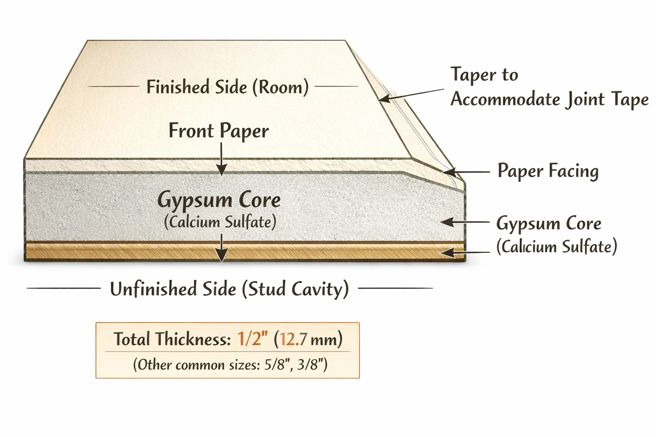
At its core, drywall is surprisingly simple. Each sheet consists of a hardened gypsum core sandwiched between two layers of paper. The front face is smooth and strong, designed to accept paint and finishes, while the back uses a rougher, natural paper.
The long edges of the panel are slightly tapered and wrapped with face paper. This small detail makes a big difference—it allows joint tape and compound to sit flush once installed. The ends are cut square and smooth, leaving the gypsum core exposed.
Why It’s Called “Drywall”
Traditional plaster walls can take up to two weeks to dry, depending on humidity and airflow. Drywall, on the other hand, contains very little moisture. Only the seams are finished with joint compound, which typically dries within 24 hours. That fast turnaround is exactly how drywall earned its name.
You might also hear it called gypsum board, wallboard, plasterboard, or even Sheetrock (which is a brand name).

Performance That Goes Beyond Convenience
Drywall isn’t just easy to install—it performs exceptionally well once it’s in place. It offers solid sound control, adds structural integrity, and provides excellent fire resistance thanks to its non-combustible gypsum core.
It’s also a decorator’s dream. Drywall creates a smooth, consistent surface that works beautifully with paint, wallpaper, paneling, textured finishes, fabric, and vinyl wall coverings.
Sizes, Types, and Specialty Panels
More Than the Standard 4×8 Sheet
When most people picture drywall, they imagine the classic 4×8 panel. While that size is still common, it’s only the beginning. Modern drywall is available in lengths up to 16 feet and widths of both 48 and 54 inches, making it easier to reduce seams and speed up installation.
Specialty Drywall for Modern Needs
Today’s drywall lineup includes panels designed for very specific jobs. There are moisture- and mold-resistant options for bathrooms and basements, fire-rated panels for added safety, and abuse-resistant boards for high-traffic areas. You’ll also find flexible 1/4-inch panels for curved surfaces, high-strength ceiling drywall, foil-backed panels, and lighter-weight versions that are easier to handle.
Some newer drywall products even help improve indoor air quality by absorbing volatile organic compounds (VOCs), contributing to healthier living spaces.
Why Builders Still Choose Drywall
Regardless of type or thickness, all drywall shares a few key advantages that make it superior to plaster, plywood, and other wall materials.
Drywall panels are widely available at most lumber stores and come in a range of lengths and thicknesses. They’re easy to cut, install, and handle, while remaining flexible and resistant to sagging. When properly taped and finished, drywall is highly resistant to cracking and accepts paint and other finishes with ease.
It also helps keep construction drier by eliminating the excess moisture associated with plaster. Add in built-in fire resistance and strong sound-dampening qualities, and it’s easy to see why drywall remains the wall covering of choice.
With so many options now available, understanding drywall makes it much easier to choose the right product for your next project—and when you hire a pro like Andy, you get the results you’re after the first time around